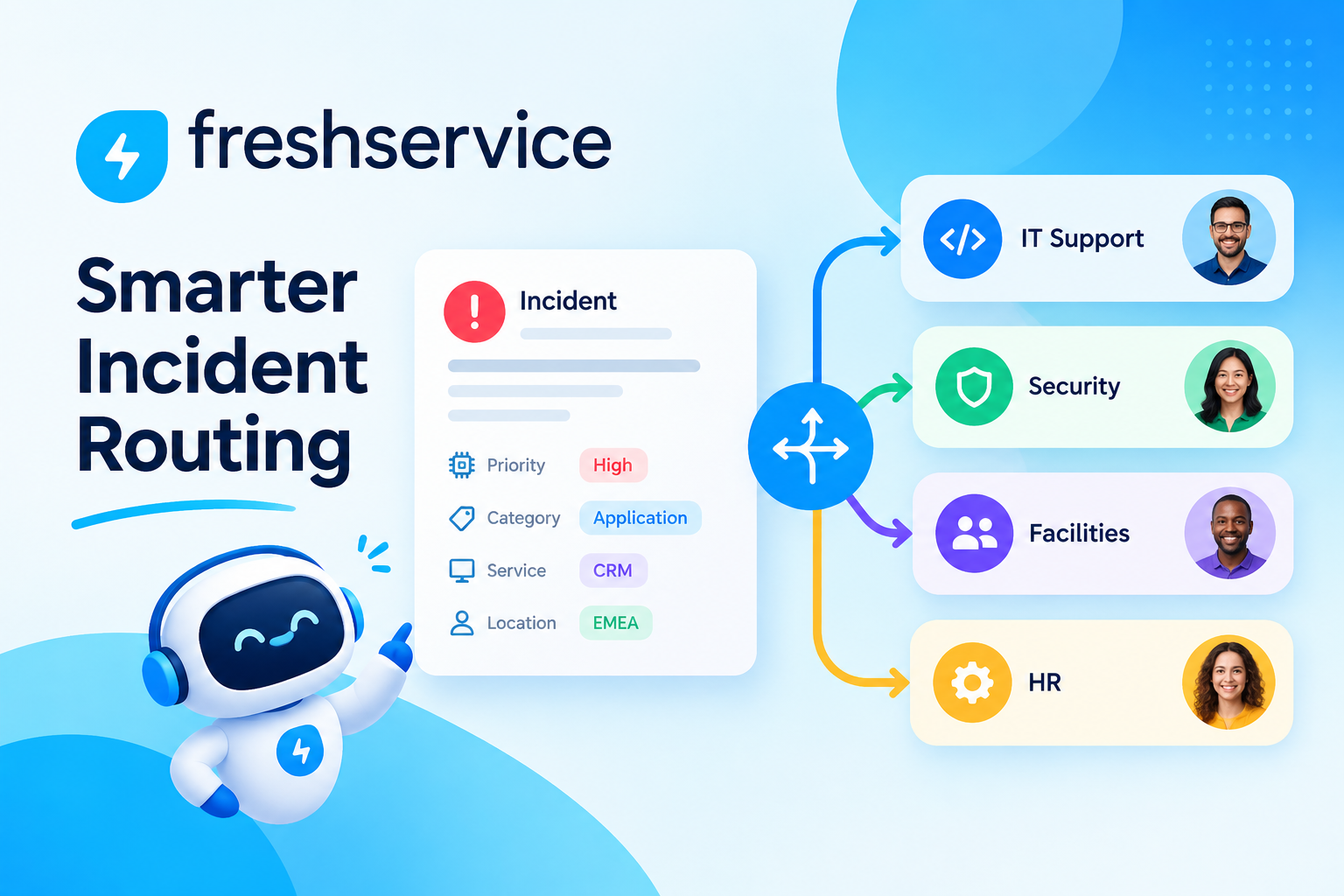
How ITSM Platforms Support Digital Transformation Initiatives

Digital transformation rarely fails because an organization picks the wrong cloud provider or the wrong analytics tool. It fails when the underlying IT operations cannot keep pace with the change, leaving new systems unsupported, ungoverned, or poorly adopted. This is precisely where a strong ITSM platform earns its place: it gives transformation programs the structure, visibility, and automation they need to move fast without losing control. This article explains what that support looks like in practice and compares two widely used platforms, ManageEngine ServiceDesk Plus and Freshservice, along the way.
Table of contents
What Does This Article Cover at a Glance?
Before exploring the details, this quick summary highlights the core ideas covered throughout the guide, from the role ITSM plays in transformation to how two leading platforms compare.
| Topic | Key Takeaway |
| ITSM’s role | Provides governance, automation, and visibility so digital transformation initiatives stay controlled and measurable. |
| ManageEngine ServiceDesk Plus | A unified ITSM, asset management, and enterprise service management platform with deep ManageEngine ecosystem integration. |
| Freshservice | A cloud-native ITSM platform built around a Workflow Automator, Orchestration Center, and broad third-party integrations. |
| Automation | Both platforms use automation and AI to reduce manual ticket handling and speed up service delivery. |
| Governance | Change, asset, and configuration management give transformation projects a controlled way to introduce new technology. |
| Decision factor | Platform choice often comes down to ecosystem fit, deployment preference, and how quickly a team needs to scale. |
How Do ManageEngine ServiceDesk Plus and Freshservice Relate to Digital Transformation?
ManageEngine ServiceDesk Plus and Freshservice represent two of the most established approaches to modern ITSM, and both are frequently evaluated by organizations planning a digital transformation program. Although they solve the same core problem, keeping IT services reliable and well-governed, they arrive at it from slightly different angles. ManageEngine ServiceDesk Plus leans on a broad ecosystem of ManageEngine products and decades of ITIL-certified process depth, while Freshservice leans on a cloud-first design built around fast configuration and a large marketplace of native integrations. Understanding both angles helps explain why each platform tends to attract a different type of transformation program.
What Role Does ManageEngine ServiceDesk Plus Play in Modernizing IT Operations?
ManageEngine ServiceDesk Plus supports transformation by unifying help desk, asset management, and a configuration management database (CMDB) alongside enterprise service management for departments such as HR, facilities, and finance. Because the platform integrates natively with other ManageEngine products, including Endpoint Central and OpManager, organizations already using that ecosystem gain a single control point for tracking how new digital initiatives affect infrastructure, endpoints, and service requests. Additionally, its embedded AI capabilities support ticket triage, routing, and virtual agent assistance, which helps IT teams absorb a growing request volume without proportionally growing headcount during a transformation push. Its visual workflow canvas also lets process owners map out multi-step business processes without writing code, which shortens the time between identifying a manual bottleneck and automating it away.
How Does Freshservice Support Digital-First Service Delivery?
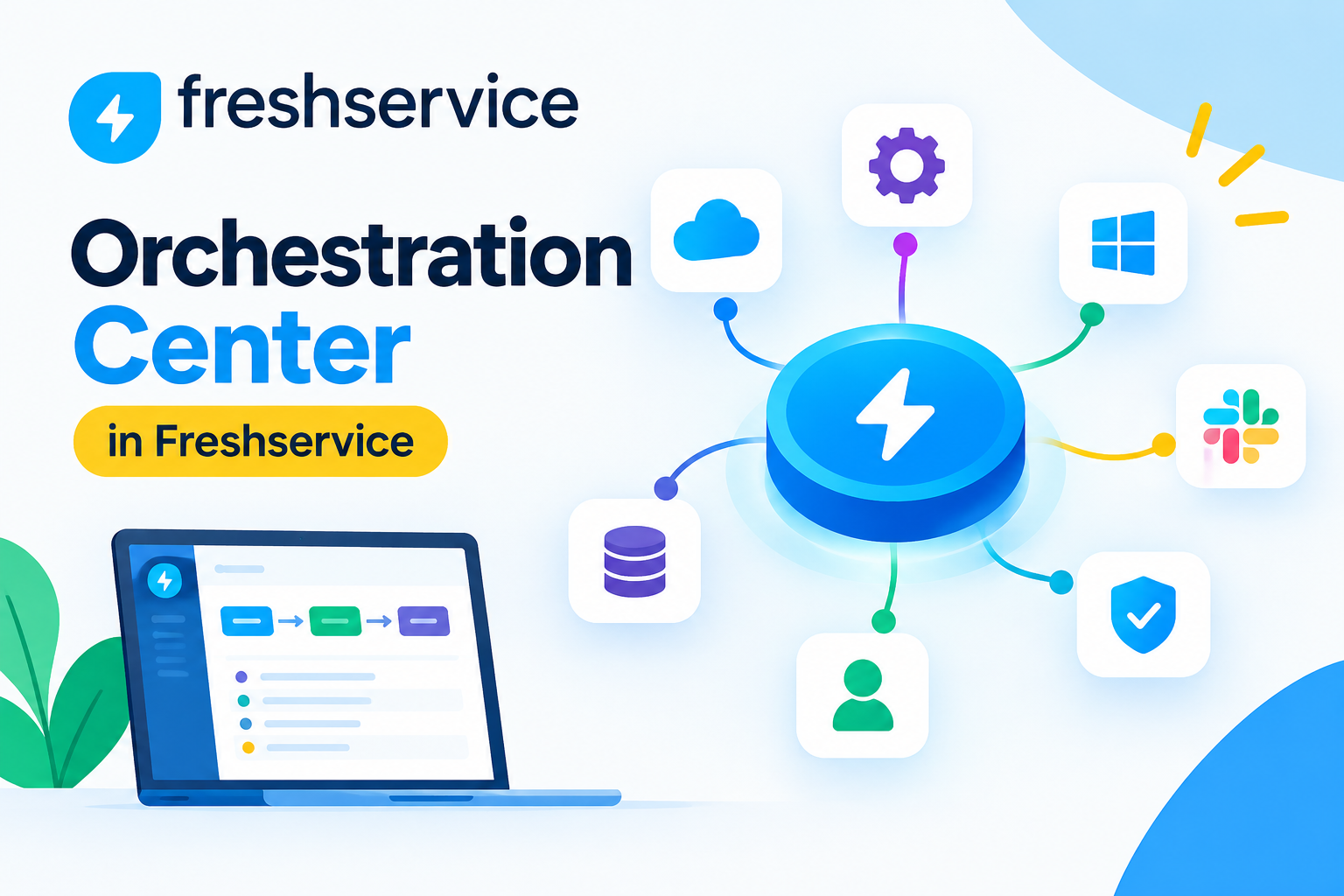
Freshservice supports transformation primarily through speed of configuration and breadth of integration. Its Workflow Automator and Orchestration Center let teams build automation for onboarding, provisioning, and escalation without heavy custom development, which matters when a transformation program needs new processes running in weeks rather than months. Furthermore, because Freshservice was built cloud-native from the start, it tends to fit organizations that are simultaneously modernizing their broader technology stack and want their ITSM platform to move at the same pace as the rest of their cloud tools. Its Freddy AI capabilities further shorten resolution times by summarizing tickets and suggesting responses, which keeps service quality steady even as ticket volume grows during a transformation rollout.
What Does Digital Transformation Actually Require From an ITSM Platform?

Digital transformation is rarely a single project with a defined end date. It is an ongoing shift in how an organization delivers value, which means the ITSM platform supporting it needs to handle continuous change rather than a one-time rollout. That requirement shows up in a few concrete ways: automation that scales with request volume, self-service that reduces dependency on the IT team, and reporting that proves the transformation is actually working.
Why Is Automation Central to Every Digital Transformation Initiative?
Automation matters because transformation initiatives typically increase the number of moving parts an IT team manages, from new cloud services to additional integrations and a larger set of digital tools employees rely on daily. Without automation, this growth translates directly into more manual ticket handling, which slows the very transformation it is meant to support. Both ManageEngine ServiceDesk Plus and Freshservice address this by automating repetitive actions such as ticket routing, approvals, and notifications, so IT staff can focus on higher-value transformation work instead of routine triage. Over time, this automation also generates the data needed to spot recurring bottlenecks, giving transformation leaders a clearer picture of where the next round of process improvement should focus.
How Does Self-Service Reduce Friction During Transformation Projects?
Self-service portals let employees resolve common issues or submit requests without waiting on a technician, which becomes especially valuable when a transformation project introduces new tools that generate a temporary spike in questions. A well-designed knowledge base paired with a service catalog absorbs much of that spike automatically. As a result, IT teams avoid the common trap of a transformation rollout overwhelming the service desk right when the organization needs that desk running smoothly the most.
This dual approach also explains why the two platforms rarely compete for the exact same buyer. Organizations tend to choose based on what already exists in their environment and how quickly they need new capabilities in production, rather than on a single feature checklist. A large enterprise standardized on ManageEngine’s broader systems management suite gains obvious efficiency from staying within that family of products, whereas a company transforming its stack around modern SaaS tools often finds Freshservice’s cloud-first philosophy easier to align with the rest of its roadmap.
How Does ITSM Support Cross-Department Digital Transformation Beyond IT?

Digital transformation rarely stays confined to the IT department for long. HR teams want faster onboarding workflows, facilities teams want a simpler way to manage requests, and finance teams want visibility into software spend. Modern ITSM platforms address this by extending the same ticketing, workflow, and reporting engine that runs IT support to other departments entirely, a capability generally known as enterprise service management.
Why Do Non-IT Departments Increasingly Rely on ITSM Platforms?
Non-IT departments adopt ITSM platforms because building a separate system for every department’s requests quickly becomes unmanageable, both from a cost and a maintenance perspective. Reusing the same platform means HR, facilities, and finance teams inherit proven workflow automation, reporting, and self-service capabilities without needing their own dedicated tooling. As a result, digital transformation efforts spread more evenly across the organization instead of stalling once they reach a department without the technical resources IT enjoys.
What Does a Successful Enterprise Service Management Rollout Look Like?
A successful rollout typically starts with one well-defined non-IT process, such as employee onboarding or facilities maintenance requests, rather than attempting to migrate every department at once. Early wins in a single department build internal credibility for the platform, which makes it far easier to expand into additional departments afterward. Moreover, involving each department in designing its own workflow, rather than imposing an IT-designed template, tends to produce higher adoption and fewer requests to revert to old email-based processes.
How Do You Plan an ITSM-Led Digital Transformation Roadmap?
A platform alone does not create transformation; a deliberate rollout plan does. Most successful programs follow a similar sequence, regardless of which ITSM platform they standardize on:
- Audit current IT assets, workflows, and pain points before configuring any new automation
- Define measurable transformation goals, such as reduced resolution time or higher self-service adoption
- Pilot new workflows with a single team or department before a company-wide rollout
- Train end users and technicians on new self-service tools and updated processes
- Expand successful workflows to additional departments using enterprise service management
- Review performance metrics on a regular cadence and refine workflows based on real usage data
Why Should Transformation Roadmaps Start With a Pilot Rather Than a Full Rollout?
Starting with a pilot limits the blast radius of any early mistakes, whether that means a poorly designed workflow, an inaccurate automation rule, or unclear self-service documentation. A single team can surface these issues quickly, and fixing them before a company-wide rollout costs far less time and credibility than fixing them after thousands of employees have already encountered a broken process. Consequently, even organizations under pressure to move fast usually save time overall by piloting first.
How Do You Keep a Transformation Roadmap on Track Once It Expands?
Once a rollout expands beyond the pilot stage, the biggest risk shifts from technical failure to lost momentum. Assigning clear ownership for each phase, reviewing the metrics outlined earlier on a fixed schedule, and communicating wins back to the organization all help sustain support for the initiative. Without this ongoing visibility, transformation programs tend to lose executive attention exactly when they need it most, as the initial rollout excitement wears off and the harder work of company-wide adoption begins.
How Do ITSM Platforms Provide Governance During Rapid Change?
Speed and governance often pull in opposite directions, yet digital transformation needs both simultaneously. ITSM platforms resolve this tension by giving organizations structured processes, specifically change management and configuration tracking, that let new technology move quickly without bypassing the checks that prevent outages or compliance gaps. This balance becomes especially important once a transformation program starts touching regulated data or customer-facing systems, where an uncontrolled change carries far more risk than a delayed one.
What Role Does Change Management Play in Controlled Transformation?
Change management gives transformation programs a repeatable way to evaluate, approve, and schedule updates to production systems, rather than letting changes happen informally. This matters most during transformation, when the volume of changes tends to spike as teams roll out new platforms, integrations, and configurations. A documented change process also creates an audit trail, which becomes valuable later when an organization needs to explain why a particular system behaves the way it does.
How Does Asset and Configuration Data Support Transformation Decisions?
A current, accurate CMDB tells transformation planners exactly what infrastructure and software already exists before they decide what to replace or integrate. Without this visibility, teams risk duplicating tools, missing dependencies, or decommissioning something that another system quietly relies on. Consequently, asset and configuration data functions less like a reporting nicety and more like a prerequisite for making safe transformation decisions.
How Does AI Change the Role of ITSM in Digital Transformation?

Artificial intelligence has shifted from an experimental add-on to a core expectation inside modern ITSM platforms. Both ManageEngine ServiceDesk Plus and Freshservice now embed AI directly into ticket handling, using it to triage, route, and even resolve simple requests automatically. This shift matters for digital transformation because it frees IT staff from repetitive work at precisely the moment transformation projects need their attention most.
What Can Predictive and Generative AI Add to Service Delivery?
Predictive AI can flag likely SLA breaches or recurring issues before they escalate, while generative AI can draft responses, summarize long ticket threads, or power a conversational virtual agent for common employee questions. Together, these capabilities reduce resolution times and give technicians more context before they even open a ticket. For a transformation program, this translates into a service desk that scales with rising demand instead of requiring proportional headcount growth. Over several months, the pattern data these AI features generate also helps leadership identify which processes are ready for deeper automation and which still need human judgment.
Where Should Organizations Be Cautious With AI-Driven Automation?
AI works best on well-defined, repetitive tasks, and it works poorly when applied to ambiguous or high-stakes decisions without human review. Organizations should therefore keep a human checkpoint in place for actions like approving major changes or handling sensitive data requests, even as they automate routine triage and responses. Moving too quickly to full automation, without validating accuracy first, tends to create more rework than it saves.
How Do You Compare ManageEngine ServiceDesk Plus and Freshservice for Digital Transformation?
Both platforms support the same underlying transformation goals, but they reach those goals through different strengths. The table below compares them across the factors that matter most when selecting a platform to support a transformation program.
| Criteria |  | |
| Deployment model | Available on-premises and in the cloud | Cloud-native, SaaS only |
| Ecosystem integration | Deep native integration with ManageEngine’s Endpoint Central, OpManager, and ADManager Plus | Broad third-party marketplace and native Orchestration Center connectors |
| Enterprise service management | Extends to HR, facilities, and finance departments | Extends to HR and other non-IT teams through the same workflow engine |
| AI capabilities | Ask Zia virtual agent, predictive triage, and generative AI integrations | Freddy AI for ticket summarization, suggested responses, and automation |
| Automation depth | Visual workflow canvas for IT and business process automation | Workflow Automator plus Orchestration Center for multi-step, connector-based automation |
| Best fit | Larger enterprises already invested in the ManageEngine product suite | Fast-moving, cloud-first teams that want quick configuration and wide integrations |
Which Platform Fits Large, Complex Enterprises Better?
Organizations that already run several ManageEngine products, or that need tight on-premises control alongside cloud flexibility, tend to find ManageEngine ServiceDesk Plus a more natural extension of their existing environment. Its depth across ITIL-certified practices also suits enterprises with mature, well-documented ITSM processes that need a platform to match that maturity rather than force a simplified workflow onto complex operations. Enterprises managing highly regulated environments, where on-premises data residency is a requirement rather than a preference, also tend to favor this deployment flexibility.
Which Platform Fits Fast-Moving, Cloud-First Teams Better?
Teams that prioritize rapid configuration, a large catalog of ready-made integrations, and a cloud-only footprint tend to gravitate toward Freshservice. This fit is especially common among organizations undergoing a broader digital transformation across their whole technology stack, since Freshservice’s cloud-native design keeps pace with a fast-changing environment without the overhead of managing on-premises infrastructure for the ITSM platform itself.
What Common Mistakes Undermine ITSM-Led Digital Transformation?

Even with a capable platform in place, a few recurring mistakes can quietly stall a transformation effort. Watching for these early prevents most of the setbacks that show up later:
- Treating the ITSM platform rollout as an IT-only project instead of a business-wide initiative
- Skipping process documentation before automating a workflow, which locks in bad habits at machine speed
- Letting the CMDB fall out of date during the busiest phase of transformation, when accuracy matters most
- Automating too aggressively before validating AI-driven suggestions against real outcomes
- Failing to train end users on new self-service tools, leaving old habits and support channels in place
- Measuring only technical metrics while ignoring employee satisfaction with the new processes
Most of these mistakes share a common root cause: treating the ITSM platform as a purely technical deployment rather than an organizational change. A platform can automate a workflow perfectly and still fail to deliver transformation value if the people using it were never brought along in the process. Addressing this requires just as much attention to communication and training as to configuration and integration work.
How Can You Measure Whether ITSM Is Actually Advancing Transformation?
Digital transformation goals are easy to state and hard to measure without the right metrics in place. Fortunately, most ITSM platforms already report on the data needed to track progress. Useful indicators include:
- Average ticket resolution time, tracked before and after a transformation milestone
- Self-service adoption rate, showing how many requests are resolved without a technician
- Change success rate, indicating how well new technology is introduced without incidents
- SLA compliance across departments newly onboarded to enterprise service management
- Employee satisfaction scores tied to specific service catalog items introduced during the transformation
Reviewing these metrics on a regular cadence, rather than only at the end of a project, lets teams adjust course while a transformation initiative is still in motion. Consequently, the ITSM platform becomes not just a support tool but a feedback mechanism for the transformation itself.
What Should You Take Away About ITSM’s Role in Digital Transformation?
Digital transformation succeeds when new technology arrives on top of a stable, well-governed IT foundation, and that foundation is exactly what a strong ITSM platform provides. Whether an organization chooses ManageEngine ServiceDesk Plus for its deep ecosystem integration and enterprise-grade process maturity, or Freshservice for its cloud-native speed and broad integration marketplace, the underlying goal stays the same: give the organization the automation, governance, and visibility needed to change quickly without losing control. Ultimately, the right platform is the one that matches how fast the organization needs to move and how much existing infrastructure it needs to support along the way.
No platform, on its own, guarantees a successful transformation. ManageEngine ServiceDesk Plus and Freshservice both provide the tools; the roadmap, training, and governance discipline described throughout this article determine whether those tools translate into real business outcomes. Organizations that treat platform selection as the beginning of the work, rather than the end of it, tend to see the strongest and most lasting results.
What Do Organizations Often Ask About ITSM and Digital Transformation?
Not necessarily. Many organizations succeed by reconfiguring their existing platform, whether that is ManageEngine ServiceDesk Plus, Freshservice, or another tool, to support new automation and self-service needs. A replacement makes sense mainly when the current platform cannot scale, lacks needed integrations, or no longer fits the organization’s deployment strategy.
Initial improvements, such as faster ticket routing or reduced manual approvals, often appear within the first few months of a well-planned rollout. Broader outcomes, like measurable gains in self-service adoption or SLA compliance across newly onboarded departments, typically take two to three quarters to show clearly, since they depend on user adoption as much as on the platform’s own configuration. Programs that skip the pilot phase described earlier often see slower results, since early configuration mistakes surface later and take longer to correct at scale.
Yes. Both platforms extend their service management capabilities to departments such as HR, facilities, and finance, using the same workflow and ticketing engine that powers IT support. This shared foundation is one of the reasons both platforms show up so frequently in enterprise-wide digital transformation programs rather than IT-only initiatives, and it is also why standardizing on one platform, rather than running separate tools per department, tends to keep transformation reporting consistent across the organization.
Why Should You Partner With Solution for Guru for Your ITSM-Led Transformation?
Choosing between platforms is only the first step; implementing one well is what actually determines whether a transformation succeeds. Solution for Guru helps organizations plan, configure, and roll out ITSM platforms like ManageEngine ServiceDesk Plus and Freshservice so that internal teams are not left figuring out workflow design or migration steps on their own. This support spans the entire rollout, from initial discovery and platform configuration through pilot testing, department-by-department expansion, and the ongoing optimization that keeps a transformation program moving after the initial launch excitement fades.
| Common Implementation Gap | How Solution for Guru Addresses It |
| No clear roadmap connecting ITSM configuration to transformation goals | Aligns platform setup directly with the organization’s transformation milestones |
| Incomplete or inaccurate CMDB before rollout | Runs a structured discovery and data-cleanup phase before go-live |
| Workflows built without testing across departments | Validates automation and self-service workflows with real stakeholders before launch |
| Low end-user adoption of new self-service tools | Builds training and change-management plans alongside the technical rollout |
Recommended:
- Building Advanced Incident Routing Logic in Freshservice
- Using Orchestration Center in Freshservice for IT Automation
- Common Freshservice Implementation Mistakes and How to Avoid Them
- Choosing and Implementing the Right ITSM Model for Your IT Team
- Best Practices for IT Asset Lifecycle Management Using ITSM Platforms
- How to Measure ITSM Success After Implementing Freshservice
- How Automation in Freshservice Helps Prevent IT Bottlenecks
- Multi-Tenant ITSM Architectures: What MSPs Should Know
- How Role-Based Access Control Improves ITSM Security
- How Self-Service Portals Improve Employee Experience in Freshservice
- ERP and ITSM Integration: Improving Operational Visibility Across Departments
- Integrating Endpoint Management Tools with Freshservice
- ManageEngine Asset Management (ITAM): Why Businesses Trust It to Control Their IT Assets
- Why Mid-Sized Companies Choose Freshservice Over Enterprise ITSM Platforms
- Best Reporting and Analytics Dashboards for IT Operations Teams in Freshservice
- How ITSM Platforms Support IT Compliance and Audit Readiness
- How ITSM Tools Support Internal IT Risk Management
- How AI Is Changing ITSM Workflows in Freshservice?
- How ITSM Platforms Like Freshservice Support Digital Transformation
- Freshservice CMDB Explained: Structure, Relationships, and Best Practices