Azuga vs Samsara: Which Fleet Management Platform Is Better?
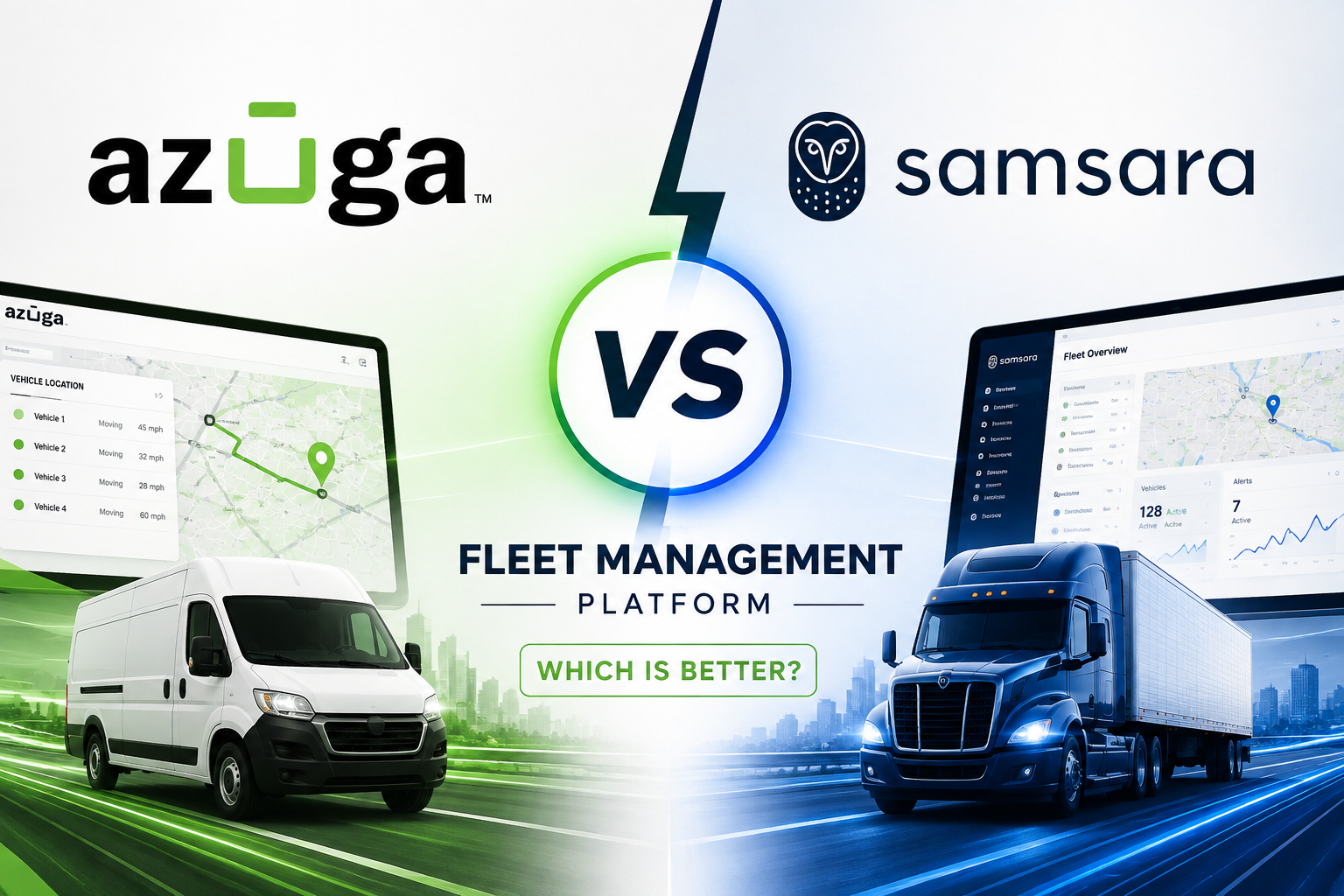
Fleet managers evaluating GPS tracking software eventually run into the same two names: Azuga and Samsara. Both platforms promise real-time visibility, safer drivers, and lower operating costs, yet they serve fleets in noticeably different ways. Samsara has grown into one of the largest IoT-driven fleet platforms in the industry, while Azuga built its reputation on driver engagement and fuel-focused tools. This article breaks down how each platform performs across the features that matter most, so fleet managers can decide which one fits their operation.
Table of contents
What Will This Comparison Cover? A Quick Summary
Before getting into the details, here’s a snapshot of what this article walks through.
| Section | What You’ll Learn |
|---|---|
| What are Azuga and Samsara? | How each platform fits into the fleet tracking topic |
| Comparison table | A side-by-side look at core features |
| GPS tracking & visibility | How real-time monitoring differs between platforms |
| Driver safety & dashcams | How AI monitoring and scoring compare |
| Maintenance & diagnostics | How each platform handles vehicle health |
| Compliance & ELD | How Hours of Service tracking is handled |
| Pricing & contracts | What to expect before requesting a quote |
| FAQs | Fast answers to common questions |
In short, Samsara tends to lead on scale, integration breadth, and enterprise-grade IoT capabilities, while Azuga tends to appeal to fleets that want a simpler, driver-engagement-focused experience with strong fuel management tools.
What Are Azuga and Samsara, and How Do They Relate to This Comparison?

Azuga, marketed as Fleet Management Software & GPS Fleet Tracking Solutions, centers its platform around real-time GPS monitoring paired with driver behavior scoring and a gamified rewards system. It tracks speeding, harsh braking, rapid acceleration, and idling, then converts that data into scorecards designed to encourage safer habits through recognition. Azuga also emphasizes fuel management, offering consumption analysis and low-fuel alerts, which appeals to fleets watching operating costs closely.

Samsara, positioned as GPS Fleet Tracking Software, takes a broader Internet of Things (IoT) approach to fleet and physical operations management. Founded in 2015 and now serving more than 15,000 clients, Samsara extends beyond vehicle tracking into equipment monitoring, building management, and AI-enhanced dashcams. Its platform emphasizes live traffic data, route analytics, and instant alerts for events like engine faults, battery issues, and geofence breaches.
This is exactly where the topic of this article comes into focus. Azuga and Samsara both solve the same core problem, tracking fleets and improving safety, but they differ in scale and scope. Azuga concentrates on core fleet tracking with a driver-friendly interface, while Samsara positions itself as a broader IoT platform capable of monitoring vehicles, equipment, and facilities together. Comparing their features side by side helps fleet managers understand which platform actually matches their operational priorities.
How Do Azuga and Samsara Compare Feature by Feature?
The table below lines up the core capabilities of both platforms so you can see the differences at a glance.
| Feature | |  |
|---|---|---|
| Real-time GPS tracking | Yes, with interactive live map | Yes, with live traffic data and route analytics |
| Driver behavior scoring | Scorecards with gamified rewards | AI-driven scorecards and safety alerts |
| Dashcams | Dual-facing AI dashcams available | AI dashcams, cited for reducing harsh events by up to 40% |
| Vehicle diagnostics | OBD-II based engine health alerts | Real-time diagnostics for battery, engine faults, and more |
| Fuel management | Fuel consumption analysis, low-fuel alerts | Fuel cost tracking, integrated with broader IoT reporting |
| Compliance/ELD | Hours of Service tracking included | Full ELD, IFTA, HOS, and DVIR compliance |
| Geofencing | Yes | Yes, with instant entry/exit alerts |
| Asset & equipment tracking | Bluetooth beacons, solar and long-life trackers | Extends into equipment monitoring and building management |
| Integrations | 20+ integrations (Fleetio, Power BI, ServiceTitan) | Broad third-party integration ecosystem |
| Minimum fleet size / contract | Historically longer-term contracts | Minimum 3 vehicles, typically 3-year contracts |
| Best suited for | Fleets prioritizing driver engagement and fuel savings | Fleets wanting a scalable, all-in-one IoT platform |
While both platforms cover the fleet tracking basics well, the table highlights a key distinction: Samsara extends its reach into broader IoT and physical operations, while Azuga stays more tightly focused on core vehicle and driver management.
How Do Azuga and Samsara Handle Real-Time GPS Tracking?
Both platforms build their foundation on live visibility, but the depth of that visibility differs.
How Does Azuga’s GPS Tracking Work?
Azuga gives fleet managers a live, interactive map showing vehicle locations, supporting faster dispatch decisions and helping reduce unnecessary mileage. Route history logging lets managers review past trips, which is useful for investigating delays or confirming job completion. Because Azuga’s interface leans toward simplicity, many users report getting comfortable with the platform quickly after onboarding.
How Does Samsara’s GPS Tracking Work?
Samsara offers what reviewers describe as an advanced, detailed view of fleet activity, allowing managers to zoom in on individual vehicles as they move along their routes. Beyond basic location tracking, Samsara layers in live traffic data and route analytics, giving dispatchers the context needed to reroute vehicles proactively rather than reactively. The platform also allows direct communication with drivers through the Samsara Driver app, keeping dispatch and drivers connected in real time.
How Do Their Driver Safety and Dashcam Features Compare?

Driver safety plays a central role in both platforms, though each approaches it with a different scope.
How Does Azuga Approach Driver Safety?
Azuga relies on behavior-based scoring, tracking metrics like harsh braking, rapid acceleration, and speeding, then converting that data into scorecards. Instead of relying purely on penalties, Azuga incorporates gamification to reward safer drivers, encouraging voluntary behavior change over time. The platform also monitors distracted driving behaviors, including phone use while in motion.
How Does Samsara Approach Driver Safety?
Samsara’s AI-enhanced dashcams have earned particular attention in the industry, with one cited case showing a 40% reduction in harsh driving events after adoption. The platform generates real-time alerts for events like speeding and harsh driving, helping managers address issues quickly rather than discovering them after the fact. Samsara’s scale also means it has extensive data behind its AI models, drawing on activity across thousands of client fleets.
Which Approach Fits Which Type of Fleet?
Fleets looking to build a positive safety culture through recognition may lean toward Azuga’s more personal, rewards-driven scoring system. Larger fleets, especially those in transportation and trucking where incident documentation carries higher stakes, often gravitate toward Samsara’s AI-driven dashcam system and its demonstrated track record at scale.
How Do Azuga and Samsara Compare on Maintenance and Diagnostics?
Preventing breakdowns matters just as much as tracking location, and both platforms offer tools to support proactive maintenance.
What Does Azuga Offer for Vehicle Health Monitoring?
Azuga accesses onboard diagnostics (OBD-II) data to detect engine issues and sends timely alerts before minor problems escalate into costly repairs. This supports scheduled maintenance planning, helping extend vehicle lifespan and reduce the risk of unexpected breakdowns disrupting a route.
What Does Samsara Offer for Vehicle Health Monitoring?
Samsara’s real-time diagnostics function alerts managers to issues such as failing batteries and engine faults, helping avoid roadside breakdowns. It also auto-generates hardware diagnostic reports for recordkeeping, and its preventive maintenance software logs prior work for each vehicle, allowing managers to predict upcoming maintenance needs more accurately.
How Do Azuga and Samsara Compare on Compliance and ELD?
For fleets operating under Hours of Service regulations, compliance functionality often becomes a deciding factor.
How Does Azuga Support Compliance?
Azuga includes built-in compliance management, assisting with Hours of Service tracking and general regulatory adherence to help fleets avoid penalties and prepare for audits. This functionality lives within the same platform used for GPS tracking and driver scoring, keeping compliance data centralized.
How Does Samsara Support Compliance?
Samsara offers full support for ELD, IFTA, HOS, and DVIR compliance, making it a strong option for fleets in heavily regulated industries. Reviewers note that Samsara’s compliance tools take much of the manual burden off small businesses and startups specifically, since the platform automates most of the reporting that would otherwise require manual tracking.
How Do Azuga and Samsara Compare on Integrations and Ecosystem?
Fleet platforms rarely work in isolation, so the strength of their third-party integrations often influences the final decision.
What Does Azuga’s Integration Ecosystem Look Like?
Azuga connects with more than 20 third-party tools, including Fleetio, Microsoft Power BI, and ServiceTitan. This gives fleets enough flexibility to link maintenance tracking, business intelligence reporting, and field service management without needing to abandon existing software investments.
What Does Samsara’s Integration Ecosystem Look Like?
Samsara offers a considerably broader integration ecosystem, reflecting its position as a wider IoT platform rather than a fleet-only tool. Its third-party connections span dispatch, accounting, and safety systems, and its scale as a company serving thousands of clients means new integrations continue to expand at a faster pace than smaller, more specialized providers.
How Do Azuga and Samsara Compare on Pricing and Contracts?

Neither Azuga nor Samsara publishes detailed pricing publicly, so fleets need to request custom quotes from each vendor.
What Should Fleets Expect From Azuga’s Pricing Model?
Azuga has historically required longer-term contracts, with some reviews noting multi-year commitments. Fleets should confirm contract length and termination terms directly with Azuga’s sales team before signing, since these details aren’t always clear upfront.
What Should Fleets Expect From Samsara’s Pricing Model?
Samsara typically requires a minimum of three vehicles and a contract length of around three years. While pricing isn’t listed online, Samsara’s broader feature set and scalability often justify the investment for growing fleets, particularly those planning to expand beyond vehicles into equipment and facility monitoring.
Conclusion
Ultimately, both Azuga and Samsara, as established Fleet Management Software & GPS Fleet Tracking Solutions providers, deliver strong core capabilities: real-time tracking, driver safety monitoring, maintenance alerts, and compliance support. However, the better choice depends on the fleet’s size and ambitions. Azuga stands out for its driver engagement tools, gamified scoring, and fuel management depth, making it a solid fit for small to mid-sized fleets that want a simpler, cost-conscious platform. Samsara, meanwhile, distinguishes itself through its broader IoT scope, AI-powered dashcams with a proven safety track record, and extensive compliance coverage, making it the stronger choice for larger fleets or businesses planning to scale their physical operations monitoring beyond vehicles alone. Before choosing between Azuga and Samsara, fleet managers should request demos from both, clarify contract terms, and match each platform’s strengths to their specific operational priorities.
Frequently Asked Questions
Both platforms work for small fleets, though Samsara is frequently recognized as a top choice for small businesses with fleets under 49 vehicles. Azuga also serves small fleets well, particularly those prioritizing straightforward onboarding and fuel-focused tools over a broader IoT feature set.
Neither Azuga nor Samsara widely advertises a free trial. Both companies typically direct interested fleets toward a demo or custom quote, so requesting a hands-on demonstration remains the best way to evaluate either platform before committing.
Samsara generally scales more easily for large or growing fleets, thanks to its broader integration ecosystem and its expansion into equipment and facility monitoring alongside vehicle tracking. Azuga can still support larger fleets, but its feature set remains more concentrated on core vehicle tracking and driver behavior tools.
Recommended
- How Secure Is Azuga? Security and Data Protection Explained
- Who Should Use Azuga Fleet Management Software?
- Preventive Maintenance with Samsara
- How Verizon Connect Reduces Fleet Operating Costs
- Integrating Verizon Connect with ERP Systems
- Best Motive Integrations for Fleet Management
- How Does Samsara Work?
- Is Motive Worth the Investment? ROI for Fleet Operators
- How Motive Improves Dispatcher Efficiency
- How Motive Helps Reduce Fleet Operating Costs
- Azuga Review: Features, Pros, Cons, and Best Use Cases
- What Is Azuga Fleet Management Software? A Complete Guide
- Top Reasons Businesses Choose Motive Fleet Management
- Samsara Review: Features, Pros, Cons, and Best Use Cases
- What Is Samsara GPS Fleet Tracking Software?
- Verizon Connect Review: Features, Pros, Cons, and Best Use Cases
- What Is Verizon Connect Fleet Management Software?
- Motive Pricing Plans Explained: How Much Does Motive Cost?
- What Is Motive Fleet Management?
- Offline Tracking: How Do Devices Store Data Without Connectivity?