Preventive Maintenance with Samsara

A vehicle breaking down on the side of the highway rarely happens without warning. Somewhere in the weeks before that moment, a fault code went unnoticed, an oil change slipped past its due date, or a battery slowly lost its charge without anyone catching the pattern. Preventive maintenance exists to catch exactly these warning signs before they turn into a stranded driver and a missed delivery, and Samsara – GPS Fleet Tracking Software has built one of the more comprehensive systems on the market for making that possible.
This article explains how preventive maintenance actually works inside Samsara, which specific tools drive that process, and how a technology partner can help a fleet configure the system to get the most value from it.
Table of contents
Quick Summary
Here is a brief overview of what this article covers:
- The core problem: unplanned breakdowns cost fleets far more than the repair itself, through downtime, missed jobs, and towing expenses.
- The Samsara approach: real-time engine diagnostics, automated maintenance scheduling, and AI-powered fault code interpretation work together to catch problems before they escalate.
- The mechanics: alerts trigger based on mileage, engine hours, or time intervals, while diagnostic data flags issues like failing batteries or low oil levels as they develop.
- The compliance layer: digital vehicle inspection reports keep pre-trip inspections consistent and audit-ready without extra paperwork.
- The honest trade-off: Samsara’s hardware and setup costs run higher than some competitors, and reporting customization has some limits.
- The partner angle: working with a specialist like Solution for Guru helps fleets configure Samsara’s maintenance tools correctly from the start.
How Does Samsara Relate to Preventive Maintenance?

Samsara – GPS Fleet Tracking Software sits directly at the center of modern preventive maintenance because it connects real-time vehicle diagnostics with automated scheduling and alerting in a single platform, rather than requiring a fleet manager to track service intervals manually across separate spreadsheets and paper logs. The platform continuously pulls engine health data, fault codes, and usage patterns from connected vehicles, then applies that data to flag developing issues and schedule the maintenance work needed to prevent them from becoming full breakdowns.
This matters directly to the topic of preventive maintenance because the entire discipline depends on catching problems early, and catching problems early requires constant, accurate visibility into vehicle condition. Samsara provides that visibility automatically, which shifts fleet maintenance from a reactive, calendar-based guessing game into a data-driven process grounded in what each vehicle is actually experiencing. The sections below walk through exactly how this works, feature by feature.
Why Does Preventive Maintenance Matter More Than Reactive Repairs?
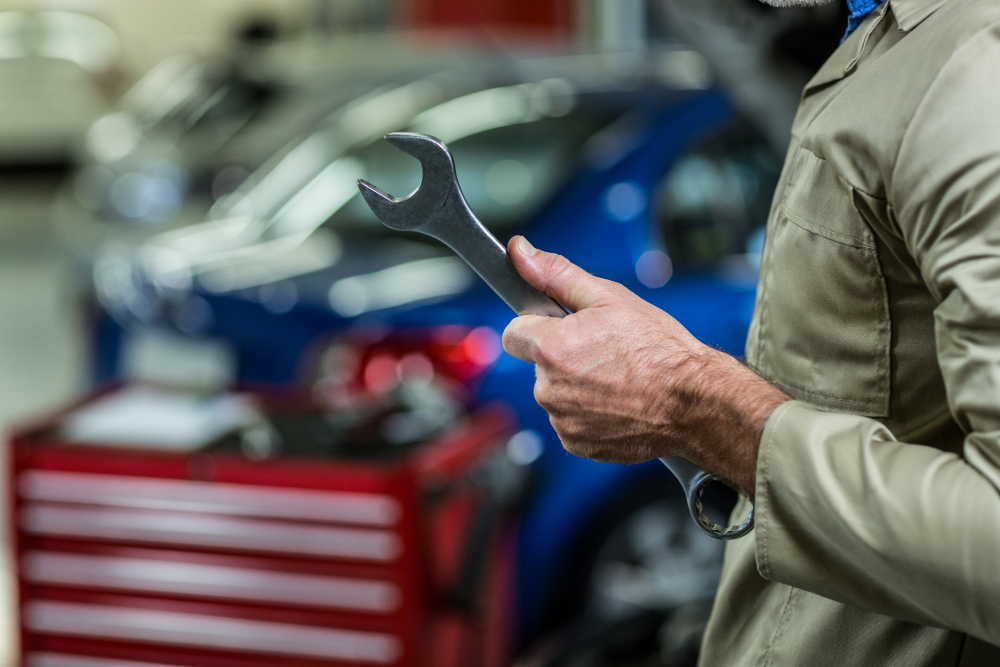
Before exploring Samsara’s specific tools, it helps to understand why preventive maintenance consistently outperforms a reactive, fix-it-when-it-breaks approach.
What Does a Breakdown Actually Cost Beyond the Repair Bill?
An unplanned breakdown rarely stays contained to a single repair invoice. It typically triggers a chain of additional costs, including towing fees, missed delivery windows, idle driver time, and sometimes a rental vehicle to keep a route running while the original truck sits in a shop. Industry experts consistently point to addressing existing mechanical issues as a top operational priority, reflecting just how disruptive these unplanned events are to daily fleet operations.
How Does Preventive Maintenance Change This Cost Equation?
Preventive maintenance interrupts this chain before it starts by catching developing issues, such as a failing battery or declining oil pressure, while they are still minor and inexpensive to address. A scheduled repair completed during a planned maintenance window costs a fraction of an emergency roadside repair, and it never pulls a vehicle out of service during a critical delivery day. Consequently, fleets that shift toward preventive maintenance typically see both lower total repair costs and considerably less unplanned downtime over time.
How Does Samsara Monitor Vehicle Health in Real Time?
Real-time diagnostics form the foundation of everything Samsara does for preventive maintenance, since a maintenance system is only as useful as the data feeding it.
What Kind of Diagnostic Data Does Samsara Actually Capture?
Samsara connects directly to a vehicle’s onboard diagnostics system, continuously pulling engine data, fault codes, and performance metrics as the vehicle operates. This connection lets the platform detect developing problems such as failing batteries, low oil levels, and engine faults well before they cause a vehicle to stall on the road. Because this monitoring happens continuously rather than only during a scheduled inspection, issues get flagged the moment they start trending in the wrong direction, not weeks later when a driver finally notices something feels off.
How Does Samsara Turn Raw Fault Codes Into Something Actionable?
Raw engine fault codes are notoriously cryptic, often appearing as a string of letters and numbers that mean little to anyone without specialized technical training. Samsara addresses this by translating fault codes into plain-language explanations and suggesting a severity level along with a recommended action, which helps fleet managers and technicians prioritize repairs effectively rather than treating every alert as equally urgent. This translation layer matters enormously for smaller fleets that may not have a dedicated mechanic on staff constantly available to interpret raw diagnostic output.
How Does Samsara Automate Maintenance Scheduling?
Beyond catching problems as they develop, Samsara also automates the routine scheduling work that keeps a fleet on a consistent, proactive maintenance rhythm.
The platform generates maintenance alerts automatically based on mileage, engine hours, or set time intervals, which means a fleet manager does not need to manually track when each individual vehicle in a fleet is due for service. This matters particularly for fleets running a mix of vehicle types and usage patterns, since a delivery van driven primarily in stop-and-go city traffic accumulates engine hours very differently than a long-haul truck covering consistent highway mileage, and the system tracks both metrics separately to keep service intervals accurate for each vehicle’s actual usage.
Samsara’s maintenance scheduling capabilities include several coordinated elements:
- Automated alerts, triggered by whichever service interval, mileage, or engine-hour threshold, a vehicle reaches first.
- Maintenance history logging, keeping a complete record of previous work for each vehicle to inform future service predictions.
- Predictive forecasting, using engine diagnostics and usage patterns to anticipate service needs before a breakdown occurs.
- Centralized records, giving fleet managers one place to review upcoming and completed maintenance across every vehicle.
Because these alerts and records live inside the same platform used for GPS tracking and compliance, fleet managers avoid the fragmentation that comes from juggling separate maintenance software alongside their tracking system.
How Do AI-Powered Tools Extend Samsara’s Maintenance Capabilities?

Samsara has continued expanding its AI-driven maintenance tools, building on its core diagnostic foundation with more advanced predictive and interpretive capabilities.
What Does Automated Maintenance Recovery Actually Do?
One of Samsara’s more recent additions, Automated Maintenance Recovery, uses vehicle diagnostics to predict maintenance needs before failures occur, combining real-time fault code descriptions with AI interpretation so technicians can act faster once an issue surfaces. This feature is part of a broader suite called Connected Maintenance, which ties diagnostic alerts directly to the maintenance workflow rather than leaving fleet managers to manually connect a fault code alert to an actual repair action.
How Does This Reduce Emergency Roadside Repairs?
Because this predictive visibility surfaces developing issues earlier and with clearer guidance on severity, fleets using these tools typically see fewer emergency roadside repairs and extended vehicle lifespans compared to relying purely on reactive, break-fix maintenance. The AI layer essentially compresses the time between when a problem first becomes detectable and when a technician actually addresses it, which is precisely the gap that determines whether a developing issue turns into a costly breakdown or a routine scheduled repair.
How Does Samsara Support Compliance Alongside Maintenance?
Preventive maintenance and regulatory compliance are closely linked, since both depend on consistent, accurate documentation of a vehicle’s condition over time.
How Do Digital Vehicle Inspection Reports Work Inside Samsara?
Samsara lets drivers submit Driver Vehicle Inspection Reports, or DVIRs, directly from their mobile app with just a few taps, replacing paper-based pre-trip inspection processes that are easy to skip or fill out inconsistently. Because these reports flow directly into the same system tracking maintenance history and diagnostics, an issue a driver notices during a pre-trip inspection connects automatically to the broader maintenance record for that vehicle, rather than existing as an isolated paper form filed away and forgotten.
Why Does Automatic Documentation Matter During an Audit?
Samsara automatically generates hardware diagnostic reports for recordkeeping, creating a clear paper trail that fleet managers can produce quickly if a regulator or auditor asks for maintenance history on a specific vehicle. This automatic documentation removes a significant administrative burden from fleet managers, who would otherwise need to manually compile maintenance records from scattered service invoices and inspection forms whenever compliance questions arise.
What Does Samsara’s Preventive Maintenance Program Include Specifically?
Samsara offers a dedicated preventive maintenance program, currently available in the United States, that consolidates several of the capabilities described above into a structured system built specifically around this use case.
| Component | What It Does | Why It Matters for Fleet Managers |
|---|---|---|
| Maintenance history logging | Records all previous work per vehicle | Enables accurate prediction of upcoming service needs |
| Interval tracking | Monitors both mileage and engine hours | Keeps service schedules accurate for mixed-use vehicles |
| Fault code translation | Converts diagnostic codes into plain language | Helps non-specialist staff prioritize repairs correctly |
| Severity-based alerts | Flags issues by urgency level | Prevents alert fatigue while surfacing critical problems |
| Digital inspection reports | Replaces paper DVIRs | Connects driver-reported issues to maintenance records |
How Does This Program Compare to Manually Managing Maintenance?
A fleet managing preventive maintenance manually typically relies on a combination of spreadsheets, paper service records, and a manager’s memory of when each vehicle was last serviced. This approach works reasonably well for a handful of vehicles, but it breaks down quickly as a fleet grows, since manual systems have no way to flag a developing engine fault in real time or automatically cross-reference mileage against engine hours for vehicles with inconsistent usage patterns. Samsara’s consolidated program removes this scaling problem entirely by handling the tracking and alerting automatically, regardless of fleet size.
What Should a Fleet Weigh Before Committing to Samsara’s Maintenance Tools?
A balanced look at Samsara needs to include its real limitations alongside its strengths, since no platform is a perfect fit for every fleet without some trade-offs.
What Costs Should a Fleet Expect?
Independent reviews consistently note that Samsara’s hardware and software implementation carries higher upfront costs compared to some competitors, and Samsara does not publish pricing publicly, requiring interested fleets to contact the vendor directly for a quote. This lack of transparent pricing can make initial budgeting more difficult compared to platforms that publish clear tiered rates, and fleets should factor this extra step into their evaluation timeline.
What Functional Limitations Have Reviewers Identified?
Reviewers have also flagged some functional limitations worth considering, including fairly restricted customization of reports and dashboards, occasional latency in real-time tracking features, and poor offline functionality in areas with weak or no internet connectivity. Fleets operating heavily in remote or rural areas with unreliable connectivity should evaluate this limitation carefully, since much of Samsara’s real-time value depends on a consistent data connection.
Do These Trade-Offs Outweigh the Benefits for Most Fleets?
Despite these limitations, independent user satisfaction ratings remain strong, with the vast majority of reviewers reporting that Samsara offers all the features required to manage fleet operations effectively. For most fleets tracking three or more vehicles, particularly those requiring real-time telematics and consistent maintenance oversight, the platform’s comprehensive feature set and proactive maintenance alerts tend to outweigh its higher cost and the reporting customization limits reviewers have noted.
Which Industries Rely Most Heavily on Samsara’s Preventive Maintenance Tools?
While Samsara serves a broad range of fleet types, certain industries have found particularly strong value in its preventive maintenance capabilities, given how heavily their operations depend on vehicle uptime.
How Do Construction Fleets Use Preventive Maintenance Differently Than Delivery Fleets?
Construction fleets often operate heavy equipment across multiple job sites, where a single breakdown can delay an entire crew rather than just one delivery route. For these fleets, Samsara’s ability to track engine hours alongside mileage matters enormously, since construction equipment frequently accumulates significant idle time and stationary engine hours that a mileage-only tracking system would completely miss. Delivery and last-mile fleets, by contrast, tend to prioritize the speed of alert response, since a stalled delivery van directly and immediately disrupts customer commitments in a way that is harder to absorb through rescheduling.
Why Do Refrigerated and Food Transport Fleets Depend on Additional Diagnostic Data?
Fleets transporting refrigerated goods rely on temperature-specific telematics that go beyond standard engine diagnostics, tracking both vehicle engine temperatures and cargo temperatures simultaneously. For these businesses, a maintenance issue is not simply an inconvenience; a failing refrigeration unit can spoil an entire truckload of perishable goods within hours, which makes early diagnostic warning even more financially critical than it would be for a fleet hauling non-perishable freight.
How Do School Transportation and Passenger Transit Fleets Approach Maintenance Differently?
School transportation and passenger transit fleets carry an added layer of responsibility, since a mechanical failure in these settings directly affects passenger safety rather than simply causing a logistical delay. These fleets tend to lean heavily on Samsara’s digital inspection reports and maintenance history logging, since consistent, well-documented pre-trip inspections are often a regulatory requirement rather than simply a best practice, and the ability to produce a clear audit trail on demand carries real weight during safety reviews.
How Does Preventive Maintenance With Samsara Affect Long-Term Vehicle Value?
Beyond avoiding immediate breakdowns, consistent preventive maintenance carries meaningful long-term financial implications that fleet managers sometimes underestimate.
How Does Regular Maintenance Extend a Vehicle’s Useful Life?
Vehicles that receive consistent, timely maintenance based on accurate diagnostic data tend to experience less cumulative wear on major components, since small issues get addressed before they force other systems to compensate and degrade faster as a result. This translates directly into a longer operational lifespan for each vehicle, which matters significantly for capital planning, since delaying a vehicle replacement by even a year or two can represent substantial savings across a fleet of any meaningful size.
How Does This Data Support Better Vehicle Replacement Decisions?
Samsara’s powered equipment utilization reporting helps fleet managers evaluate the daily use of vehicles and assets at a deeper level, determining vehicle return on investment and pointing toward the best future capital investments. Rather than replacing vehicles on a fixed schedule regardless of actual condition, fleet managers can use accumulated maintenance and diagnostic history to identify which specific vehicles are approaching the end of their cost-effective service life, and which ones, despite their age, remain solid performers worth keeping in rotation a while longer.
Why Does This Approach Beat Replacing Vehicles on a Fixed Schedule?
A fixed replacement schedule treats every vehicle the same regardless of how it has actually been driven, maintained, or utilized, which often means retiring vehicles prematurely while still burning cash on serviceable equipment, or conversely holding onto a vehicle too long simply because it has not yet hit an arbitrary mileage threshold. Data-driven replacement decisions, informed by the kind of detailed maintenance and utilization history Samsara provides, generally produce better capital efficiency than either extreme.
How Should a Fleet Get Started With Samsara’s Preventive Maintenance Tools?

Getting real value from Samsara’s maintenance capabilities depends heavily on how thoughtfully a fleet approaches initial setup rather than simply activating every feature at once.
- Define organizational structure first, setting up regions, departments, or customer segments, since this determines how reporting and permissions roll up throughout the system.
- Test each vehicle installation individually, verifying GPS signal, diagnostic connectivity, and data transmission before moving on to the next vehicle.
- Start with critical alerts only, such as major fault codes and breakdown risks, then gradually add operational alerts based on team feedback to avoid overwhelming staff with alert fatigue.
- Roll out driver app usage incrementally, focusing first on core functions like inspection reports before introducing additional features as comfort with the platform grows.
- Integrate maintenance data with other systems, such as fuel card providers, to build a more complete picture of vehicle health and operating costs.
Following this kind of phased rollout consistently produces smoother adoption than attempting to activate every feature simultaneously on day one.
Conclusion
Preventive maintenance succeeds or fails based on how early a fleet can catch a developing problem, and Samsara – GPS Fleet Tracking Software gives fleet managers exactly that kind of early visibility through continuous engine diagnostics, automated scheduling, and AI-powered fault interpretation. The platform’s higher upfront costs and some reporting limitations are real considerations, but for fleets tracking three or more vehicles and looking to reduce unplanned downtime, Samsara consistently delivers the kind of proactive, data-driven maintenance program that manual tracking simply cannot match at scale.
Frequently Asked Questions
Samsara predicts maintenance needs by continuously monitoring engine diagnostics, fault codes, and usage patterns, then cross-referencing this data against both mileage and engine hours to forecast service requirements before a breakdown occurs. This approach lets the platform account for vehicles with inconsistent usage, such as a truck that accumulates significant idle engine hours without covering much highway distance, ensuring maintenance timing reflects actual wear rather than mileage alone.
Samsara’s dedicated preventive maintenance software is currently available specifically for fleets operating in the United States, though the platform’s broader diagnostic monitoring and alerting capabilities extend more widely. Fleets operating internationally should confirm exact feature availability for their specific region directly with Samsara or through an implementation partner before assuming full program access.
Samsara is generally best suited for fleets tracking three or more vehicles or assets, since its real-time telematics and proactive maintenance alerts deliver the strongest value at that scale and above. Smaller fleets should weigh Samsara’s higher upfront hardware and software costs against the operational savings from reduced downtime, and working with an implementation specialist can help determine whether the platform’s full feature set makes sense for a fleet’s specific size and budget.
What Are the Benefits of Partnering With Solution for Guru?
Configuring Samsara’s maintenance alerts, organizational structure, and diagnostic thresholds correctly takes real expertise, and this is where Solution for Guru adds meaningful value for fleets adopting the platform.
Solution for Guru specializes in SaaS and system integrations, which means the team can help a fleet configure Samsara’s maintenance program to match its actual vehicle mix and operational needs, rather than relying on generic default alert thresholds that may not fit every vehicle type. Beyond initial setup, the team can connect Samsara with other systems a fleet already relies on, such as fuel card providers or accounting software, ensuring maintenance and cost data stay consistent across the entire operation.
Working with Solution for Guru offers several concrete advantages:
- Correct initial configuration of alert thresholds, maintenance schedules, and organizational hierarchy tailored to a fleet’s actual operations.
- Custom integrations between Samsara and existing fuel management or accounting platforms.
- Phased rollout planning, helping fleets avoid alert fatigue and driver resistance during implementation.
- Ongoing optimization, refining maintenance thresholds and reporting as fleet composition and needs evolve.
- Strategic guidance, helping fleet managers interpret diagnostic and predictive maintenance data to make faster, better-informed repair decisions.
Because every fleet has a different mix of vehicle types, usage patterns, and existing software, a tailored setup consistently produces better long-term maintenance outcomes than a generic, self-managed rollout. Partnering with a team that understands both the technical and operational sides of fleet maintenance helps a business reduce downtime faster and with fewer costly missteps.
Recommended
- How Verizon Connect Reduces Fleet Operating Costs
- Integrating Verizon Connect with ERP Systems
- Best Motive Integrations for Fleet Management
- How Does Samsara Work?
- Is Motive Worth the Investment? ROI for Fleet Operators
- How Motive Improves Dispatcher Efficiency
- How Motive Helps Reduce Fleet Operating Costs
- Azuga Review: Features, Pros, Cons, and Best Use Cases
- What Is Azuga Fleet Management Software? A Complete Guide
- Top Reasons Businesses Choose Motive Fleet Management
- Samsara Review: Features, Pros, Cons, and Best Use Cases
- What Is Samsara GPS Fleet Tracking Software?
- Verizon Connect Review: Features, Pros, Cons, and Best Use Cases
- What Is Verizon Connect Fleet Management Software?
- Motive Pricing Plans Explained: How Much Does Motive Cost?
- What Is Motive Fleet Management?
- What Is the True Cost Breakdown of Fleet Tracking Systems?
- Offline Tracking: How Do Devices Store Data Without Connectivity?